Human Rights Education Under Pressure - Study
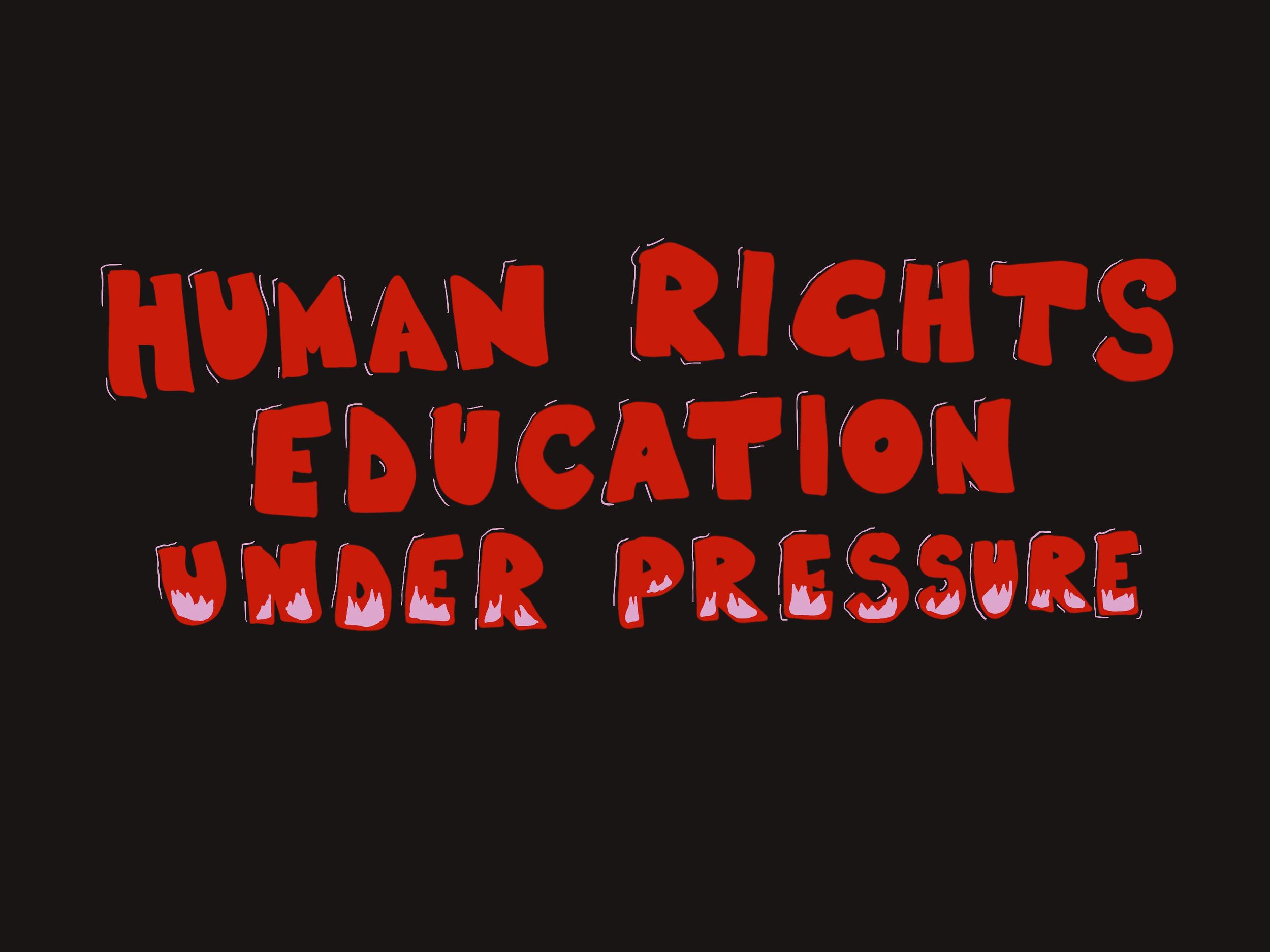
Doing Human Rights Education in Today’s Europe
A qualitative study by HREYN – Human Rights Education Youth Network
This page explains what the study is about, who is behind it, who can participate, and what taking part involves.
Why this study, and why now?
Across Europe, many people doing human rights education (HRE) in NGOs, youth organisations and grassroots groups are facing a tougher environment. One might recognise some of this:
Funding cuts or shifts – grants suddenly ending, donors moving to “safer” topics.
More control and paperwork – new reporting rules, more scrutiny of who funds you and what you do.
Feeling watched – online or offline monitoring, pressure from authorities or school management.
Political or media attacks – being labelled “foreign agents”, “ideological”, “too political” or “against traditional values”.
Having to “tone down” your work – avoiding topics like migration, gender, SOGIESC, racism, or using softer language so your work can continue.
International documents say civil society is central to HRE. But we have very little systematic evidence about what it actually feels like to do this work right now, and what practitioners say they need. This study wants to close that gap by listening carefully to the people at the centre of HRE practice.
Who is doing this study?
The research is coordinated by HREYN – Human Rights Education Youth Network,
an independent, international network of human rights education practitioners, trainers and youth workers.
We are not a governmental or intergovernmental institution.
We work with and for HRE practitioners, and we want to gather solid evidence that can be used for advocacy, support and policy dialogue.
The study is led by HREYN members who are also a researchers (you’ll get their full name and contact details as a next step).
What is this study about?
Short version:
We want to understand how human rights education practitioners in Europe experience their work in the current climate and what they need to keep doing it sustainably and safely.
We’re interested in:
How you describe your day-to-day work in HRE.
How recent political changes and restrictions have affected your work.
Concrete stories or situations where rules, attacks, or fear changed what you could do.
How this impacts you personally (emotionally, professionally, in your identity as an educator).
What strategies, alliances and sources of support help you keep going.
What you think needs to change (in policies, funding, networks) for HRE to have a future in your context.
Who can participate?
You are warmly invited if all of these apply:
You are 18 or older, and
You have at least 2 years of experience in human rights education, and
Human rights education is/was a core part of your work, for example:
non-formal education activities
trainings and workshops
youth work and community education
educational work in social movements or campaigns
You are based in a non-profit / civil society setting:
NGO, youth organisation, grassroots group, network, social movement, independent collective, etc.
You are not employed by a government or intergovernmental organisation (e.g. CoE, EU, UN) in your HRE role, and
You can take part in an interview in English.
What will I be asked to do?
If you decide to take part, you will be invited to one confidential interview:
Form: Semi-structured conversation (not a questionnaire, more like a guided dialogue).
Length: About 60–75 minutes.
Format: Online (video call).
How will my information be used and protected?
With your permission, the interview will be audio-recorded so we can transcribe it accurately.
Your recording will be kept on encrypted storage and deleted from the recording device as soon as possible.
The transcript will be pseudonymised:
your name, organisation and any identifiable details will be removed or changed,
in any report you will appear only as something like “Practitioner 5, youth NGO, Southern Europe”.
Only the research team will have access to the full data.
The results will be reported in aggregate/thematic form (patterns and themes), illustrated by anonymised quotes.
We will not share raw recordings or full transcripts with the Council of Europe or any donor.
This is not an evaluation of you, your organisation, or the forum.
You can withdraw from the study at any point before we anonymise and start analysing your data.
What are the risks and benefits?
Risks
Talking about difficult experiences may bring up strong emotions.
We will:avoid pushing you to share anything you don’t want to,
pause if you become uncomfortable,
offer a short debrief and, where possible, connect you with support resources if needed.
There is a very small risk of indirect identification in small fields/contexts.
To minimise this, we will:generalise sensitive details (e.g. exact city, very specific projects),
check especially sensitive quotes with you if needed.
Benefits
You contribute to evidence that comes directly from practitioners, not just from policy documents.
The findings will be used by HREYN and allies for advocacy, to argue for:
better protection and support for HRE practitioners,
funding architectures that don’t undermine critical HRE,
recognition of the emotional and political labour involved in this work.
Some participants also find it helpful to reflect and put words to their experiences in a safe, structured way.
We cannot offer payment, but we hope the longer-term benefits for the HRE community will be meaningful.
How do I join?
If you’re interested in taking part or want to know more, you can write us at 📧 contact@hreyn.net
We’ll send you a short information sheet and consent form and suggest possible interview times.
Thank you for considering taking part.
Your experience matters – and it should shape how human rights education is supported in Europe.